
Ash Tree Reductions, Hornby, North Lancashire
Managing Ash Dieback in Three Mature Ash Trees
R Watson Tree Surgery was asked to carry out a significant reduction of three mature ash trees in Hornby, North Lancashire, which were showing the early stages of Ash Dieback (Hymenoscyphus fraxineus).
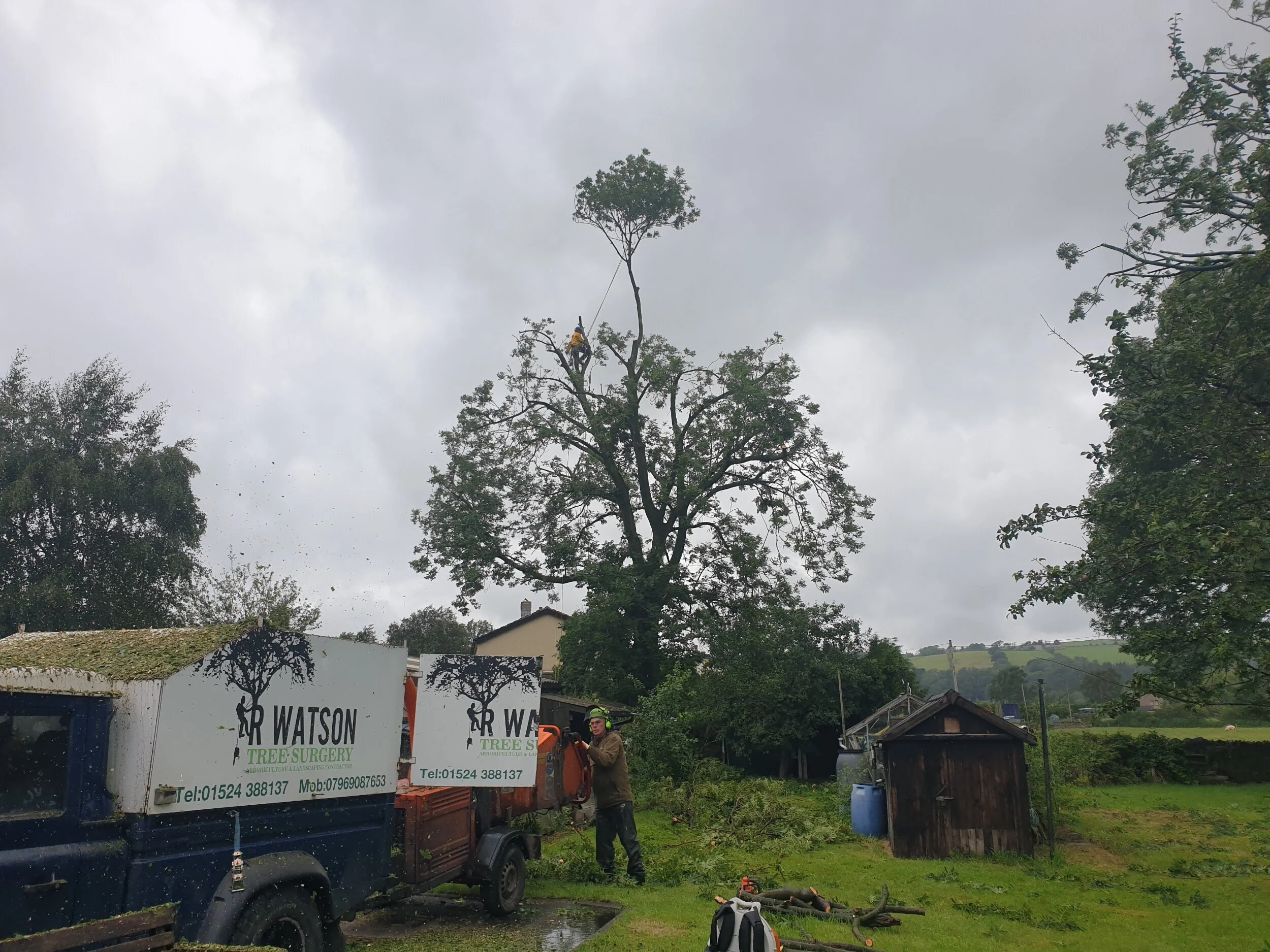
Although the symptoms were not immediately obvious from a distance, closer inspection revealed the first signs of canopy decline, with the outermost branch tips beginning to recede. As Ash Dieback progresses, affected trees gradually lose vitality, resulting in increasing amounts of deadwood and a greater risk of branch failure.
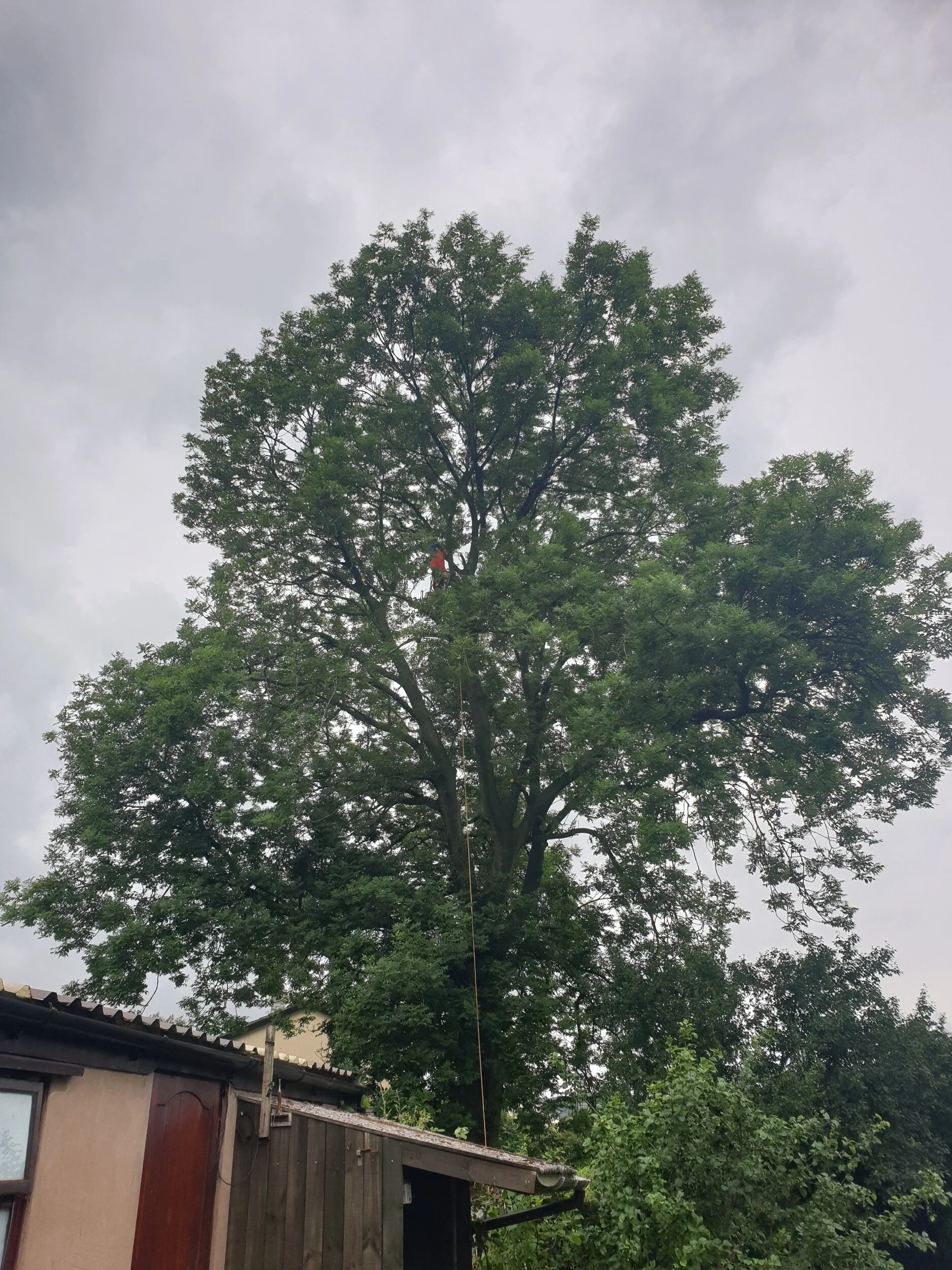
Although the symptoms were not immediately obvious in this image, closer inspection showed signs of canopy decline, with the outermost branch tips beginning to recede. As Ash Dieback progresses, affected trees can gradually lose vitality, resulting in deadwood formation and an increased risk of branch failure.
Why Reduce Instead of Remove?
Ash Dieback does not always mean a tree needs to be removed immediately.
Where appropriate, reducing the size and weight of the crown can help lower the risk of branch failure while allowing the tree to be retained and monitored. Every ash tree responds differently to the disease, so management decisions should always be based on its condition, location and the level of risk it presents.
For these three trees, a substantial crown reduction offered the most appropriate balance between risk management and retention.
Careful Tree Work Around Buildings
The location of the trees meant the work required careful planning.
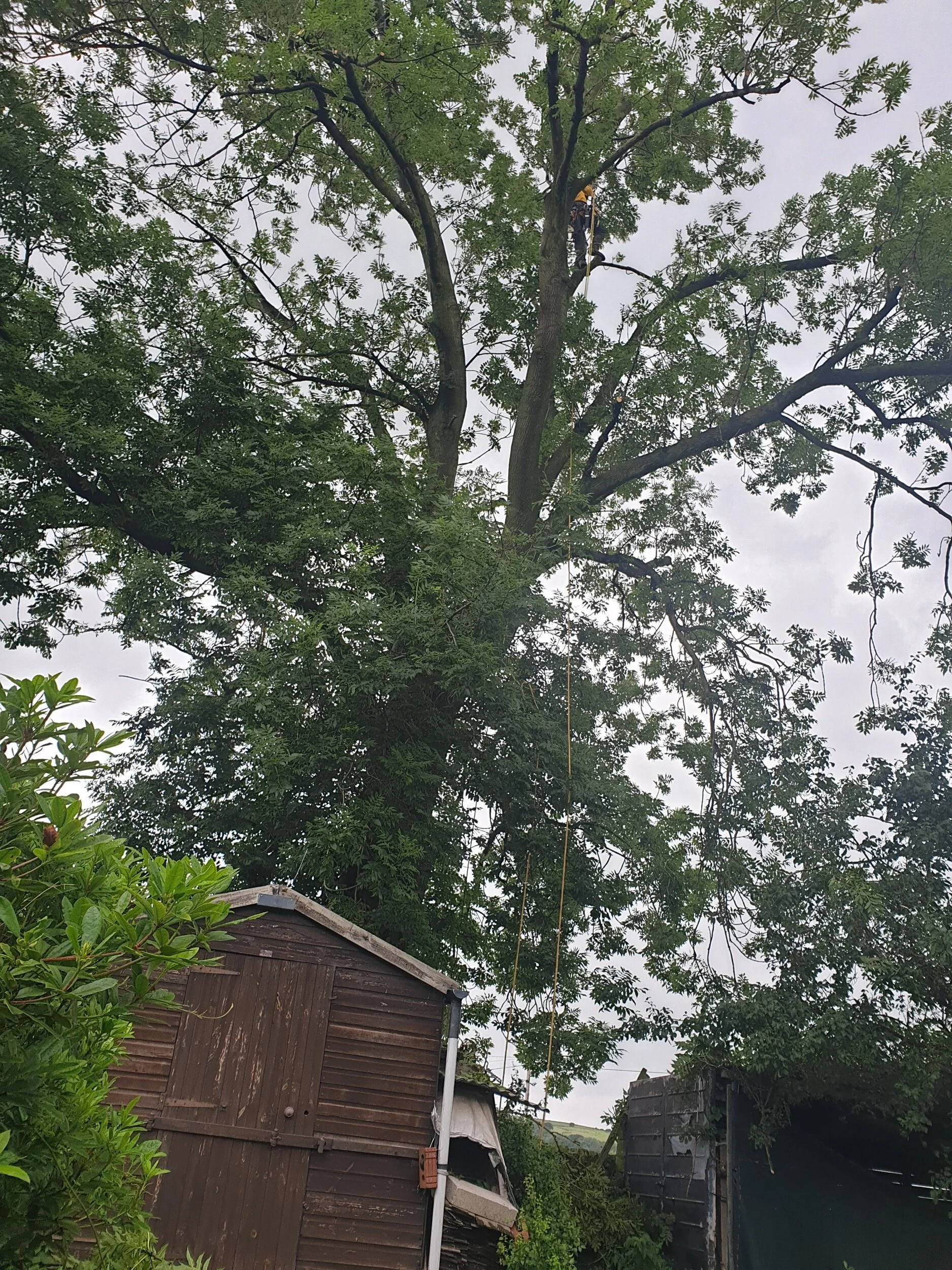
Each ash tree stood above multiple sheds and greenhouses, leaving little room for error. Branches were removed in a controlled manner to protect the structures below while achieving the desired reduction.
By carefully reducing the crowns, we significantly decreased the loading on the main limbs while maintaining the natural form of the trees wherever possible.
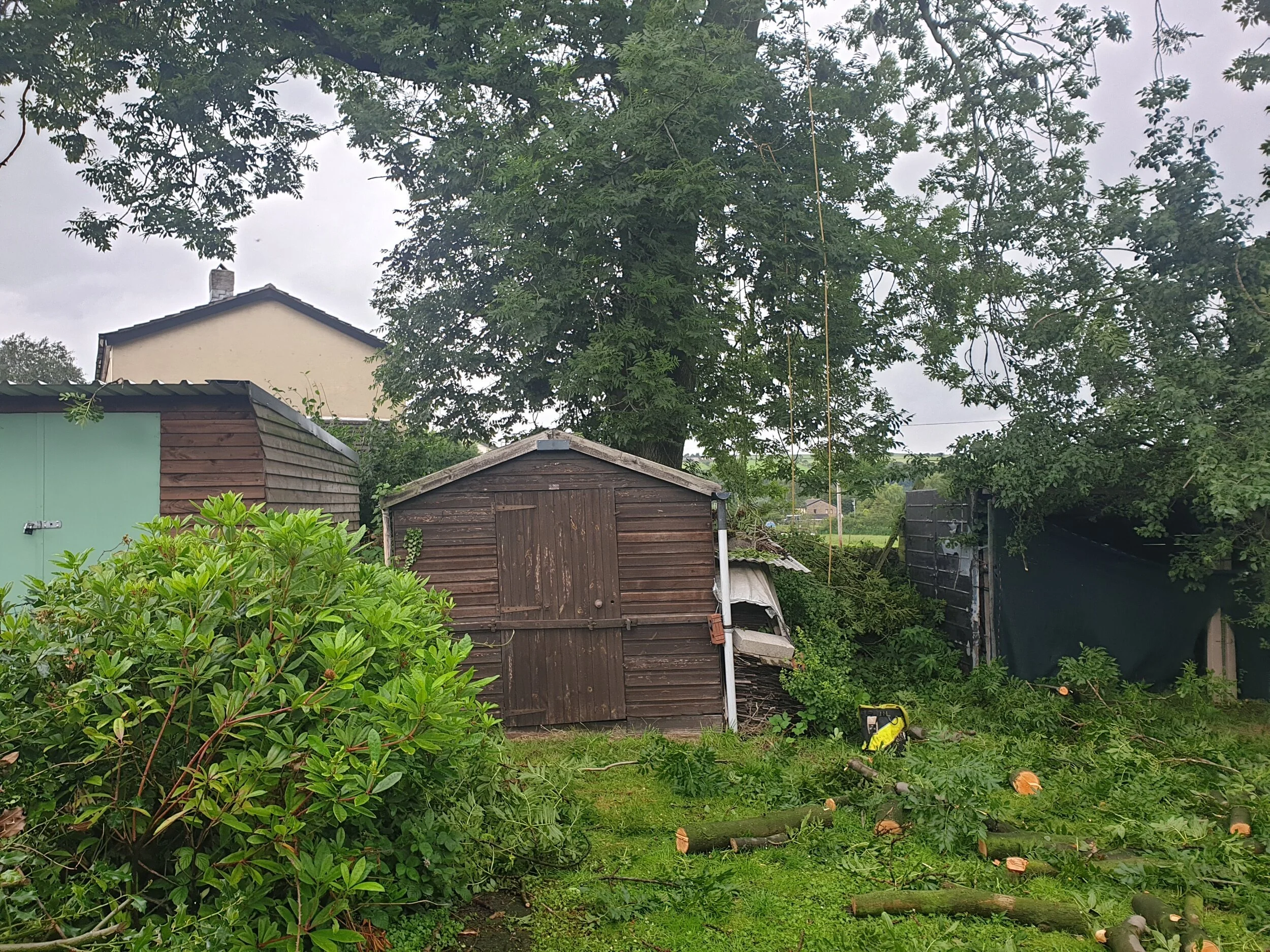
Due to the location of these trees, careful planning and precision were essential. The trees were positioned above multiple sheds and greenhouses, requiring controlled removal of branches to avoid damage to the surrounding structures. Our experienced team worked carefully to remove sections of the canopy in a safe and efficient manner.
The Finished Result
The completed reductions removed a considerable amount of weight from each tree, reducing the likelihood of major branch failures as the effects of Ash Dieback progress.
While no treatment can cure Ash Dieback, appropriate management can often prolong the safe life of affected trees and delay the need for removal where circumstances allow.
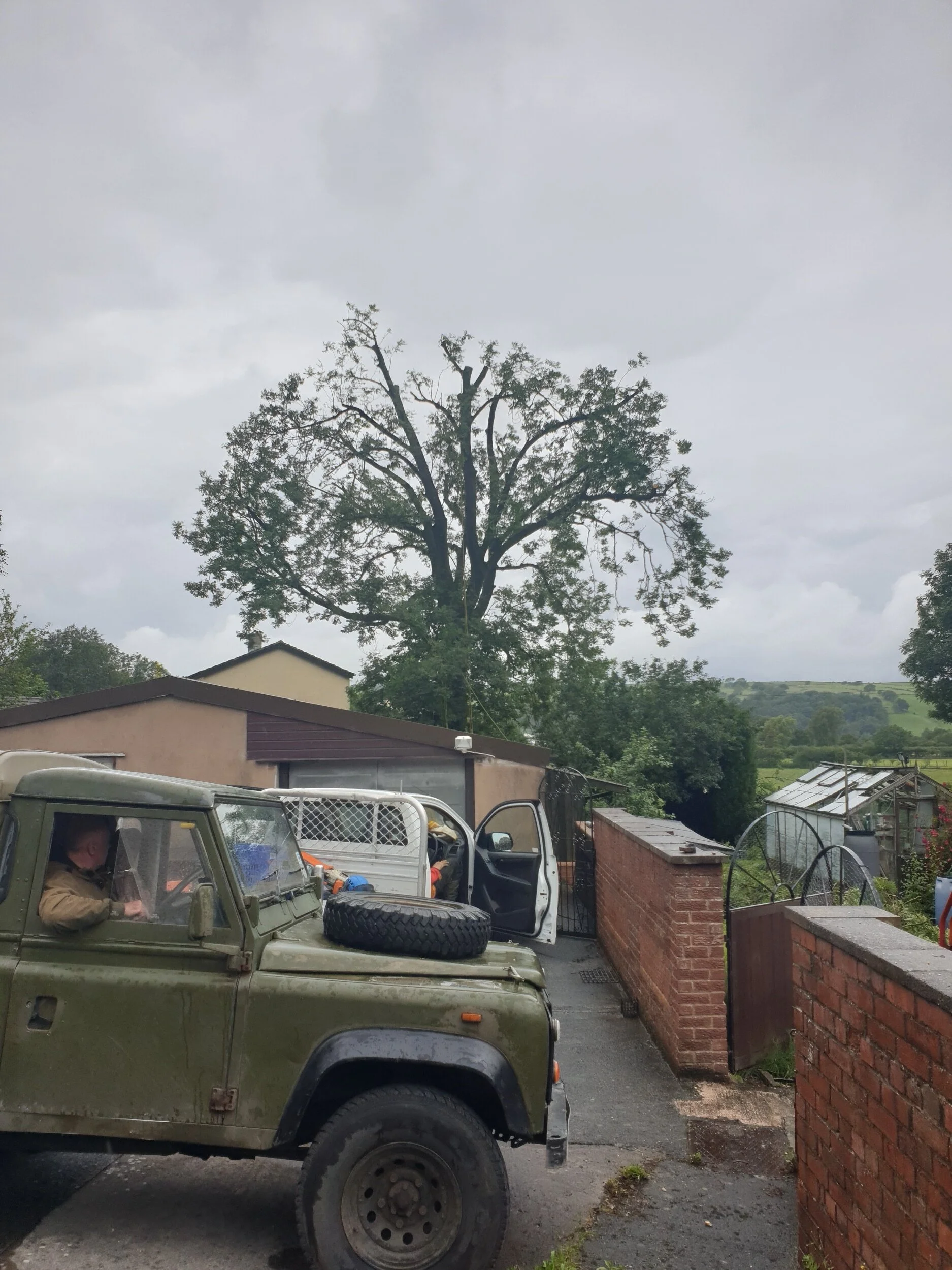
The finished result saw a significant amount of weight removed from the trees, helping to reduce the likelihood of major branch failure as the trees continue to decline due to Ash Dieback. The aim was to manage the risk while retaining as much of the trees' structure and lifespan as possible.
R Watson Tree Surgery provides professional tree pruning, tree reductions, tree removals and tree management throughout Hornby, Lancaster, Caton, Kirkby Lonsdale, the Lune Valley and wider North Lancashire.
If you have an ash tree showing signs of decline or are unsure what work may be required, get in touch for honest advice and a free, no-obligation quotation.
Professional Tree Surgery in Hornby and the Lune Valley
R Watson Tree Surgery provides professional tree surgery throughout Hornby, Lancaster, Caton, Kirkby Lonsdale, the Lune Valley and across North Lancashire.
Our services include:
If you have an ash tree showing signs of decline, or you’re unsure whether it requires pruning, reduction or removal, contact R Watson Tree Surgery for honest advice and a free, no-obligation quotation.