
How to Fill Out a Tree Preservation Order (TPO) Application Form
If your tree is protected by a Tree Preservation Order (TPO), you’ll usually need permission from your local council before carrying out any pruning or felling. The application can seem daunting at first, but it’s actually quite straightforward once you know what’s required.
The good news? R Watson Tree Surgery can prepare and submit the application for you, ensuring everything is completed correctly and giving it the best chance of being approved.
Step 1 – Check if Your Tree is Protected Before doing anything else, check whether your tree is covered by a Tree Preservation Order or is within a Conservation Area. Most local councils provide an online map, or you can contact their planning department
Step 2 – Complete Your Details The first section simply asks for your name, address and contact details. If you’re asking a tree surgeon to complete the application on your behalf, they can be listed as your agent.
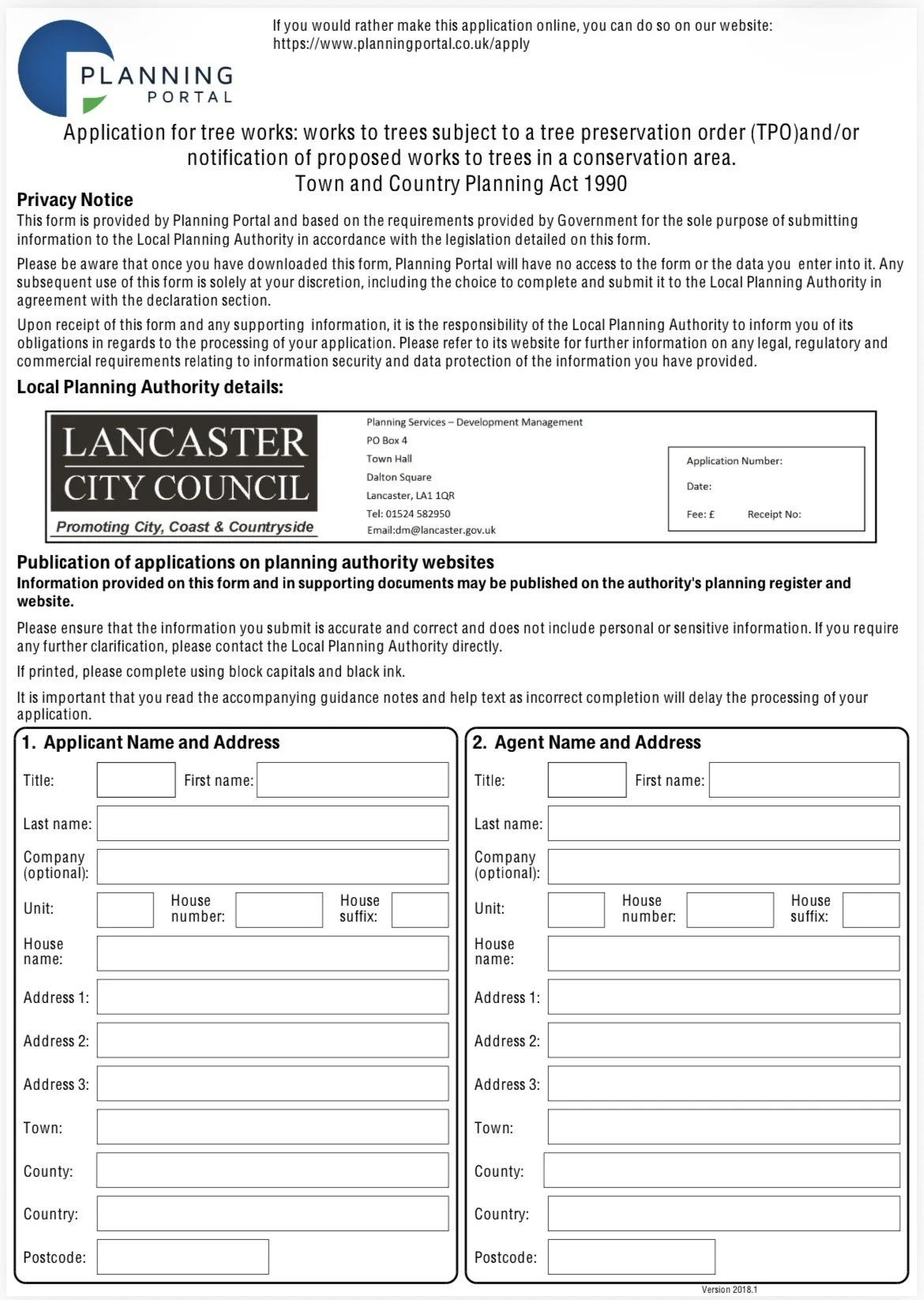
TPO Application, Lancaster
Step 3 – Tell the Council Where the Tree Is Provide the address where the tree is growing. If it isn’t at your home address, you’ll need to clearly describe the location so the council can identify it. You May also require written permission from the land/tree owner.
Step 4 – Explain the Work You Want to Carry Out This is one of the most important sections. Be specific. Instead of writing: “Cut tree.” A better description would be: “Reduce the crown by approximately 25%, removing deadwood and reshaping the canopy.” The council needs to understand exactly what work is proposed and why. The form specifically asks you to identify the tree species, describe the work clearly and explain your reasons. If you’re applying to fell a protected tree, you’ll usually need to explain whether a replacement tree will be planted.
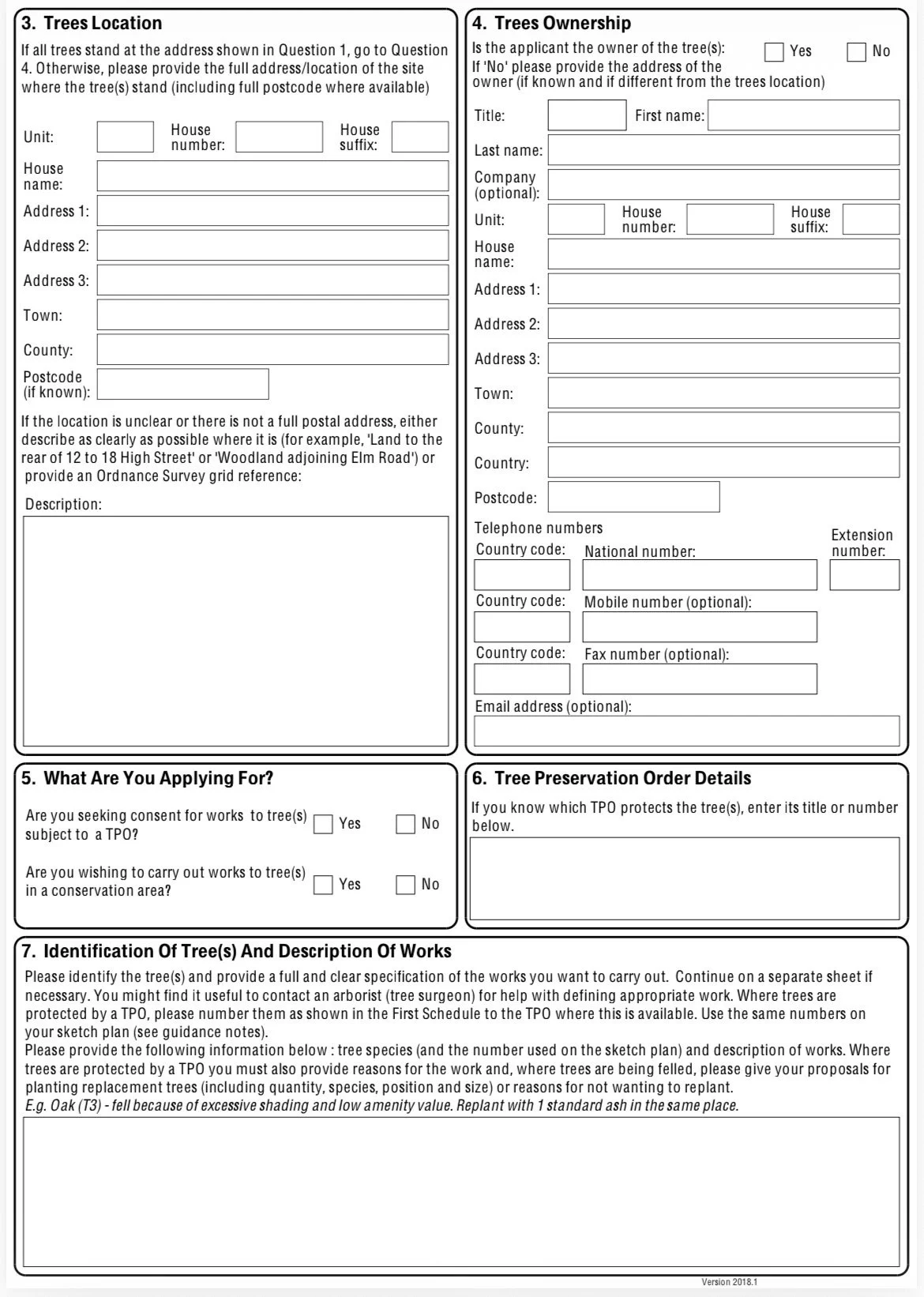
TPO Application, Lancaster
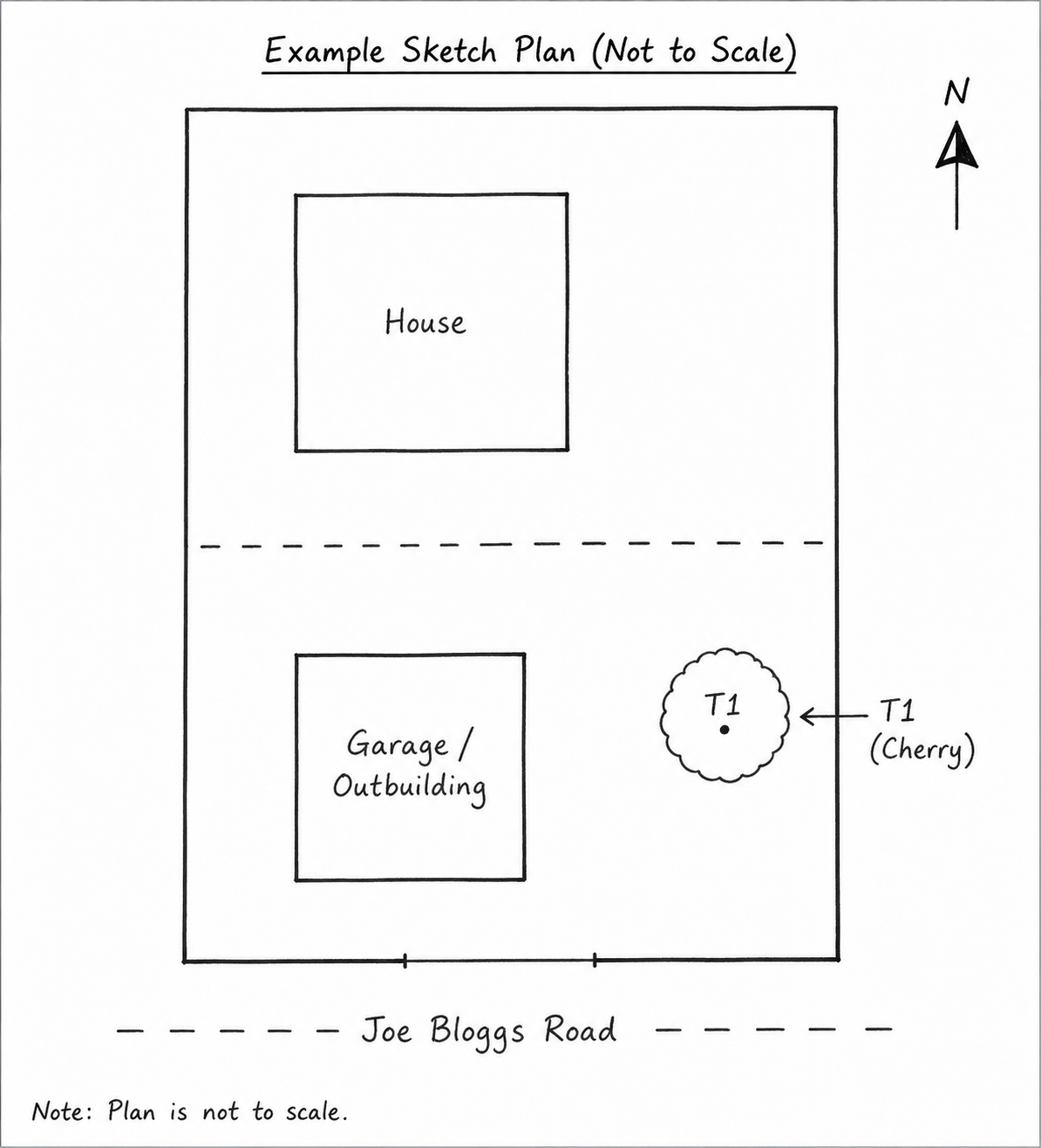
Step 5 – Draw a Simple Sketch Plan You don’t need to be an artist. A basic hand-drawn sketch showing:
your house
the garden
the tree(s)
nearby roads or buildings
is usually sufficient to help the council identify the correct tree. A sketch plan is required for TPO applications.
Step 6 – Include Supporting Information Sometimes the council may ask for additional evidence. For example:
photographs
an arboricultural report
evidence of damage
reports relating to structural movement or subsidence
The more complex the reason for the work, the more supporting information may be required.
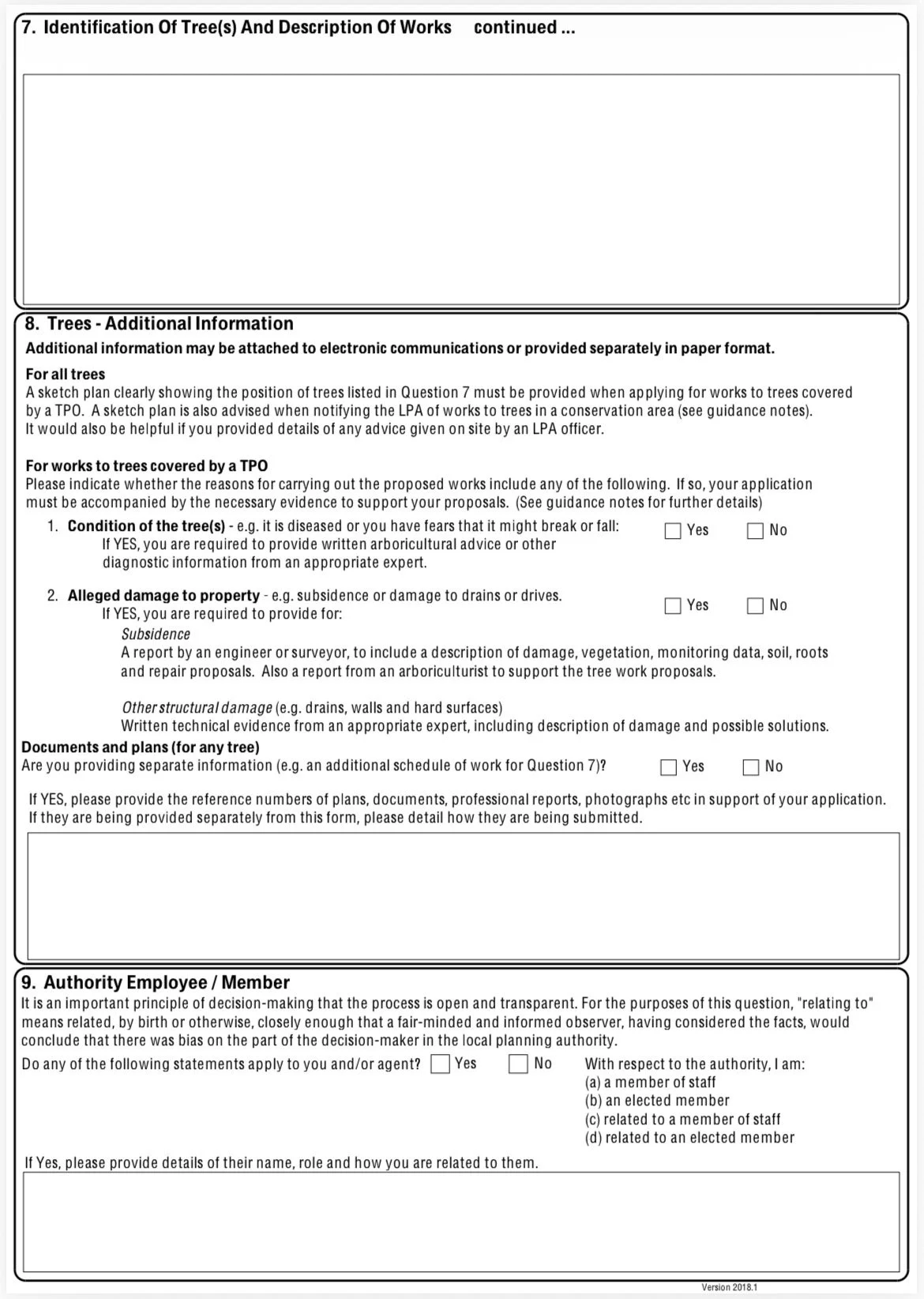
TPO Lancaster
Step 7 – Check Everything Before You Submit Before sending the application, make sure you’ve included:
A clear description of the work.
The reason for the work.
A sketch plan.
Any supporting photographs or reports.
Incomplete applications are one of the most common reasons for delays. The application checklist is designed to help you avoid this.
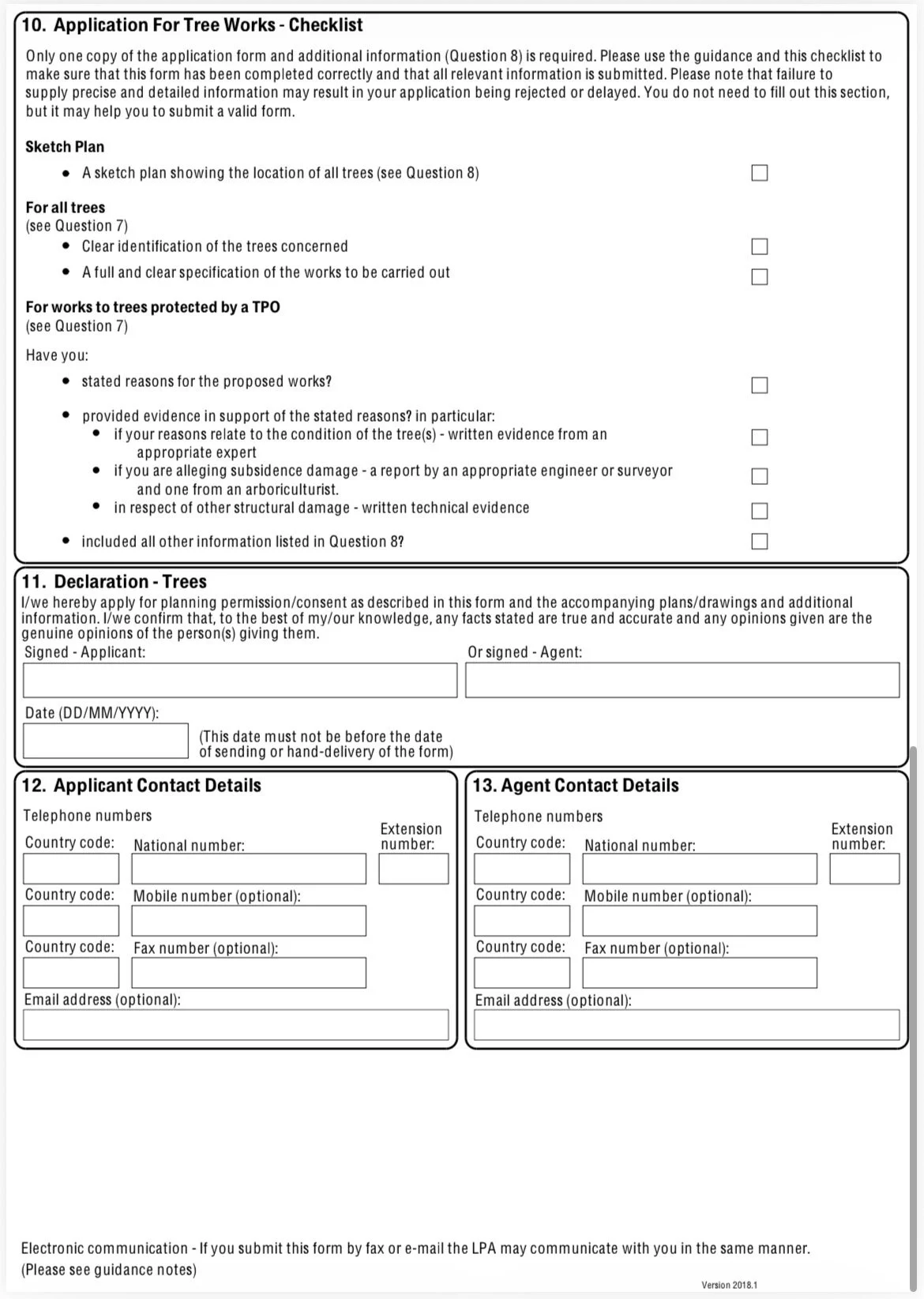
TPO Application, Lancaster
We’d Be Happy to Do It for You Many homeowners prefer not to deal with the paperwork themselves. At R Watson Tree Surgery, we regularly assist customers with Tree Preservation Order applications by:
Inspecting the tree.
Advising on appropriate work.
Writing a professional specification.
Preparing the sketch plan.
Completing and submitting the application.
Liaising with the Local Planning Authority if required.
This not only saves you time but also helps ensure the application is clear, accurate and professionally presented. If you have a protected tree in Lancaster, North Lancashire or South Cumbria, we’d be happy to advise you and, where required, complete the application on your behalf.